
A Bishop O’Gorman Catholic Schools Annual Report Story
There is something powerful that happens when a group of friends decides, together, to take their faith seriously.
At O’Gorman Junior High, that decision — made quietly, freely, one student at a time — is where faith begins to flourish.
A VISION ROOTED IN CHOICE
The small groups at O’Gorman Junior High began as an invitation.
When the Pro Ecclesia Sancta (PES) Sisters joined the O’Gorman community, they brought with them a deep desire to help students grow spiritually. Small groups became one of the primary ways to make that happen. The reasoning was simple and profound: when a student chooses to attend a small group, they are already leaning in. “It is an elective,” explains Father Michael Kapperman, O’Gorman Junior High chaplain. “By choosing to go to a small group, the individual is going to go deeper in their faith.”
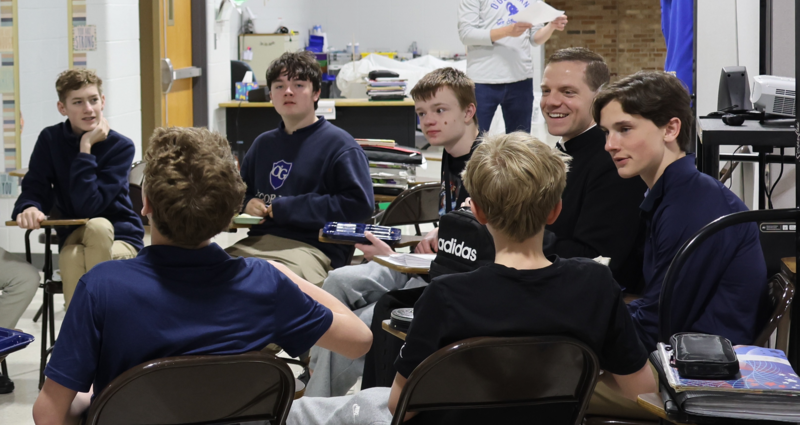
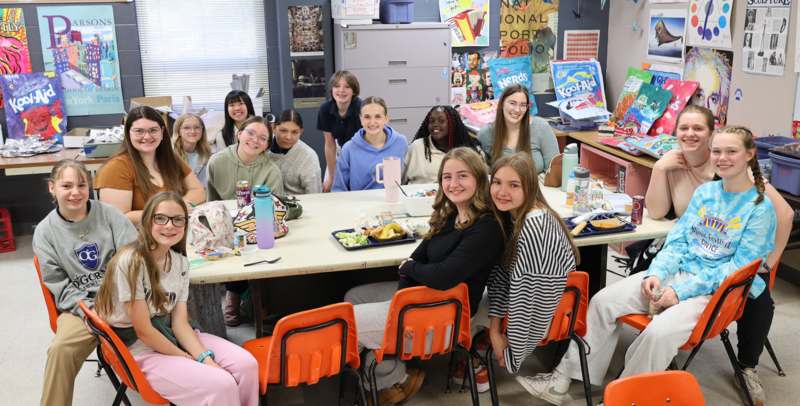
But the vision didn’t stop at the individual student. It extended to something even more powerful: the friend group. Adolescence is a season shaped enormously by peer influence. O’Gorman’s Campus Ministry leans into that reality rather than working against it. In these small groups, students are placed with their friends, so that when a group of friends begins to grow deeper in faith, the whole circle is lifted together.
FROM THE GROUND UP — AND GROWING
What began as a modest initiative has grown steadily year after year. Today, nearly 100 junior high students participate in small groups which is a number that is as encouraging as it is logistically challenging.
“You can’t have a small group when there’s 15 or 20 kids in a group,” Father Kapperman notes with a smile. “That’s not what a small group is.”
The program needed more leaders. And in what Father Kapperman describes simply as God’s providence, the answer to that need opened a door to something far greater.
A PARTNERSHIP BORN FROM NEED, SHAPED BY GRACE
As the O’Gorman Junior High community asked how to find more small group leaders, they were simultaneously wrestling with another question: how do you help junior high students maintain their connection to their home parish?
Elementary school students are deeply rooted in their parishes by attending Mass with and seeing their local priests throughout the week. But the transition to junior high can sometimes fade that connection. The answer to both questions turned out to be the same one.
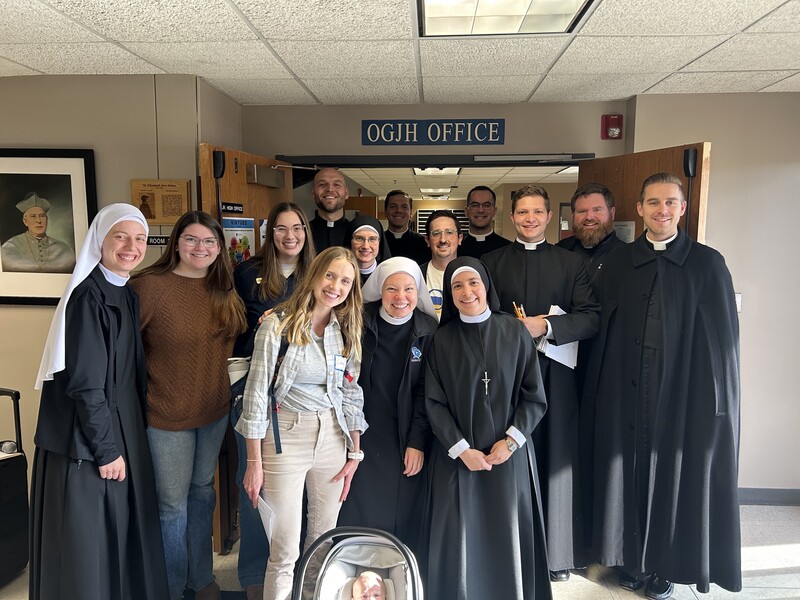
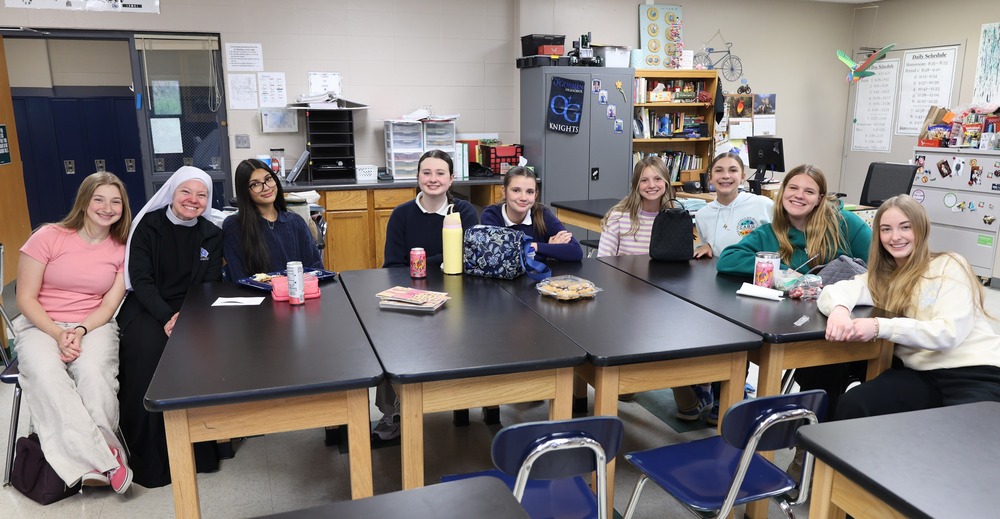
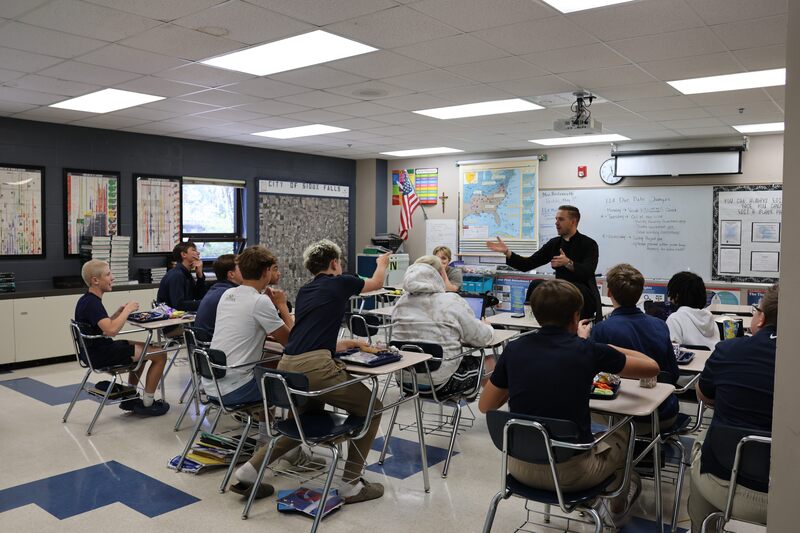
This year, O’Gorman Junior High took a significant step by inviting parish priests and local parish youth ministers to come onto campus and lead small groups themselves. The results have been remarkable. Young men gather with priests and PES Brothers. Young women meet with PES Sisters and their parish youth ministers. For many students, the person leading their small group is the same person they see in their home parish.
“There’s this real partnership between the junior high and the parishes,” Father Kapperman explains, “in which the parish leaders are able to come in and lead a small group with their students.”
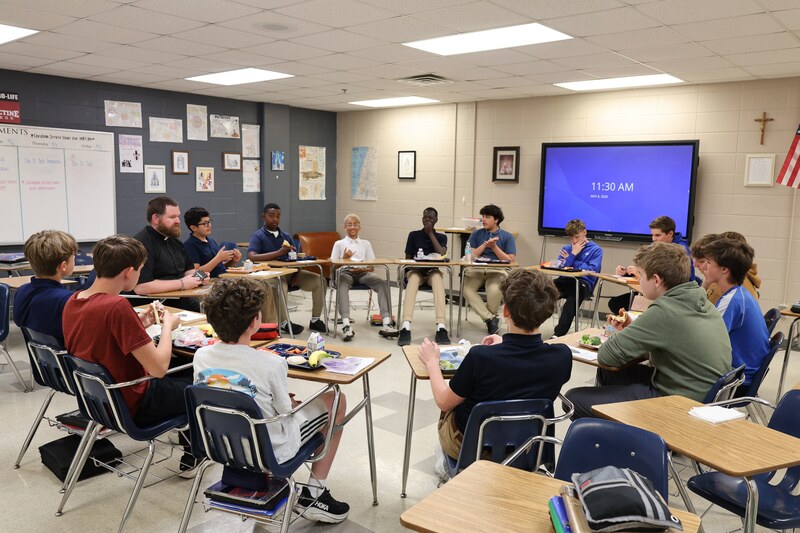
Fr. Kristopher Cowles, Parochial Vicar at St. John the Baptist Pastorate and one of those parish leaders, speaks to what this opportunity has meant from his side of the partnership: “These small groups have been a great blessing and a wonderful opportunity to stay connected to the students at the Junior High and accompany them in prayer, the faith, and fun. Their openness, enthusiasm, and honesty have been refreshing.”
The school is increasingly becoming an extension of the parishes, just like the elementary schools.
WHAT HAPPENS IN A SMALL GROUP
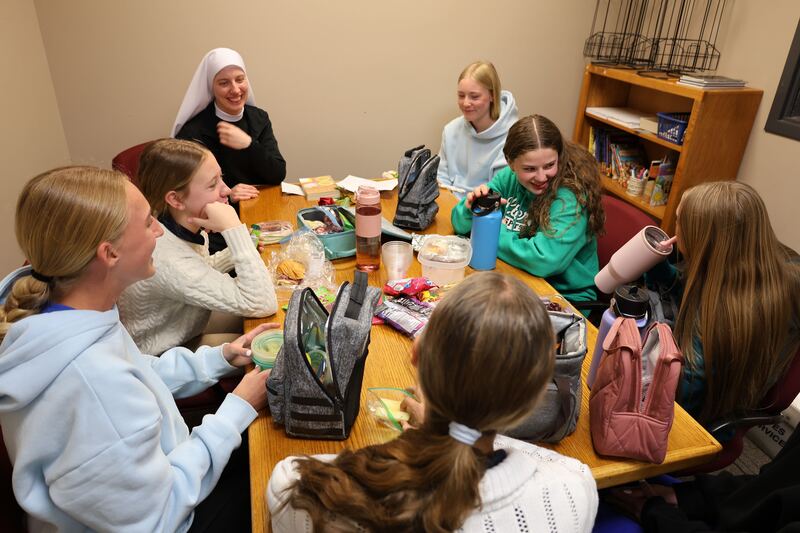
For the uninitiated, a small group might sound like a formal religious exercise. In practice, it looks more like friendship in action. Fr. Klein ‘12, Chaplain at O’Gorman High School and a small group leader himself, describes the rhythm that makes it work:
“Socrates said that the unexamined life is not worth living. With that in mind, we always begin the small group with reflecting on what has happened in our lives over the past week or two, and share something that has been good, something that has been a struggle, and some moment we can point to God having worked in our lives. It’s basic, but it helps them in a small way to be attentive to life. Then we often have a Scripture passage that we will read and see how it relates to our lives.”
The format is simple by design: make room for joy, then make room for God. For students, it opens something up.
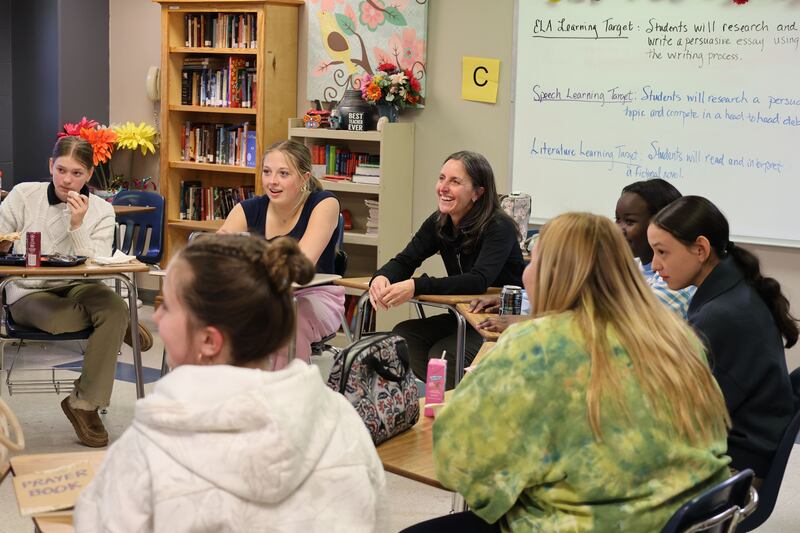
“Outside of small groups, I had experiences in my faith life but it was hard to know what to do with them,” reflects Ashton Konechne a high school student, who has participated in small groups since junior high. “Small groups have been a great way to share how God has been working in my life. I’ve come to discover that it’s not just me who has these experiences, but all of us. They have made us all more comfortable sharing our highs and lows, and sharing our experiences in our faith life. My favorite part about small groups is how it requires reflection upon the past. It has helped me to look back at what’s been going on in my life and not just having experiences and not knowing what to take from them.”
THE FRUITS ARE ALREADY VISIBLE
Father Kapperman has had a front-row seat to what happens when small groups take root.
When he celebrated Mass at O’Gorman High School, he noticed something that stopped him in his tracks: friend groups filing into the chapel together for daily Mass. Students who once sat around a lunch table for a small group in 8th grade, now filling a pew as high school freshmen and sophomores — still choosing faith, still choosing it together.
“This was a small group in 8th grade,” he reflects, “and now here they are, still taking their faith seriously as friends.”
Fr. Klein has witnessed the same flourishing from his place at the high school: “[Small groups] led to fruitful discussions as a group, more of them attending daily Mass, more of them wanting to go to confession, and many more one-on-one conversations that I do not think would have happened without the regular times together in small groups.”
For students who began this journey in junior high, the impact is deeply personal. Raynie Scholten ‘26, has lived the full arc of the program, from participant to leader: “Starting in a small group at a young age has had a huge impact on my faith formation throughout junior high and high school. Participating in small groups has helped me grow closer to God and build Christ-centered friendships that have become very important in my life. Small groups are something I look forward to every week because they provide encouragement, support, and a place where I can openly talk about my faith. Going from being a participant in small groups to now leading my own has been an amazing experience. It has helped me become more involved in my faith life while also allowing me to help younger students grow in their relationship with God, just as others once helped me.”
Veronica Althoff, OGHS student, echoes that sense of continuity: “Joining a small group in the Junior High helped me to become more familiar with the campus ministry program at O’Gorman. Small groups have allowed me to explore my faith in a new way and learn how to choose to live for Christ around my peers. Being able to have conversations with friends about the faith and to have guidance from someone more experienced has made my friendships grow deeper. Junior High small groups set me up to be on the right track and have the right community going into high school.”
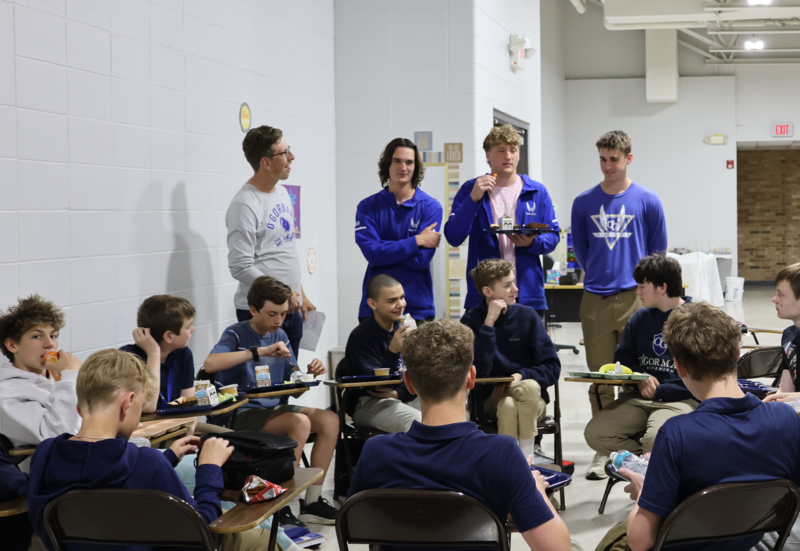
Brian Stai, campus ministries coordinator at O’Gorman High School, has watched the same trend emerge from his vantage point.
“The Junior High offering several different campus ministry opportunities for their students has really been fruitful and impactful for students transitioning to the High School,” Stai says. “We have noticed in the past couple of years that students entering their freshman year at the High School are familiar with campus ministry events, small groups, and retreats. Because of that, we have seen an uptick in the amount of freshmen who are coming to The Well, small groups, and other high school campus ministry opportunities.”
Students aren’t arriving at the high school as strangers to faith formation, they’re arriving ready. The foundation built in elementary school and continued in junior high is showing up in chapel pews, small group sign-up sheets, and retreat rosters. These examples are not isolated data points. They are signs of a culture changing, one friendship, one conversation, one small group at a time.
A LONG VIEW
Father Kapperman’s hopes for the future are straightforward: that the program continues to grow, that parish priests and youth ministers remain involved, and that more students, year after year, choose to go deeper in their faith. Because when friend groups go deeper, something begins to happen to the whole school. Faith stops being a private matter and becomes a visible, lived reality. Other students notice. Others are drawn in. And quietly, steadily, the faith culture that defines O’Gorman is renewed and deepened in every generation.